



 The One Thing that Shocks Dentists
 Diet Recovery: e-Book Review
 Assembly Line Orthodontics Can Damage Faces
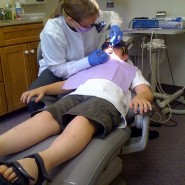 Pediatric Dentistry – Possible Inadequacies
 Magical Toothpaste Too Good To Be True
 Fluoride: A Toxic Waste, Part 2
 Sugar Alcohols and Tooth Decay
 Mounting Environmental Mercury Concerns – But What About Our Mouths?
 Bacteria Does Not Cause Disease – Raw Milk And Tooth Decay
 Type 2 Diabetes Epidemic in Children; Dentistry and Tooth Decay
Study Shows Many Dentists Aggressively Overtreat
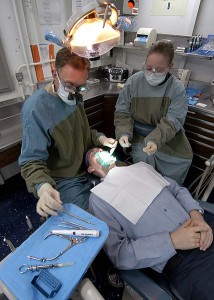
Many dental procedures are invasive, costly, and ineffective.
A journal article review published in the International Dental Journal has found that many dentists are often subjecting patients to unnecessary treatments that are ineffective. The researchers state:
"Traditional restorative dental treatment has many shortcomings and has not been shown to be an effective method for managing caries. In spite of this, many dentists continue to be powered by an aggressive restorative approach which may result in unnecessary treatment and which must now be seen as inappropriate."
(Elderton 17-24)
This same researcher also conducted studies on preventative and restorative dentistry. He found that when restorative dentistry is used, it often introduces new problems. While he attributes part of the problem to bacteria, it is actually the treatments themselves that are the issue. Bacteria is a response to decay in the mouth, but not the actual cause. When treatments are used to fix dental problems, they do not address the underlying cause of the tooth decay, which could be a lack of nutrients in the diet, an imbalanced internal body chemistry, and altered blood sugar levels.
"Restorative and scaling treatments have not generally provided an effective method for managing dental caries and periodontal diseases. Rather, restorative treatment has often covered up the disease processes in the short term and created a new problem: that of maintenance and re-restoration of restored teeth." (Elderton 12-21)
When people visit the dentist, they are often told that they need to have invasive procedures done, such as , fillings, or other treatments that are both costly and painful. Although many people find out later that they have been victims of , there are still dentists that continue to practice invasive dentistry using treatments that are not actually beneficial to the patient. While there are some cases, such as when someone has large mercury fillings or severe forms of decay, that warrants dental treatments, most cases of tooth decay and caries could be prevented and healed through a nutrient-rich diet of whole foods.
The problem with many dental procedures is that they partially kill the tooth or introduce dangerous chemicals into the body. For instance, when an individual has a , the dentist will drill a hole in the tooth and remove the inner pulp of the tooth. After this, the tooth will be cleaned with chemicals, filled with a synthetic material, and topped with a crown or large filling. What the root canal does not address is the underlying reason why the tooth became infected in the first place, which could be due to biting problems or a poor diet.
Many dental treatments, including root canals, are done unnecessarily. Even if there is an infection present, the tooth is usually still relatively healthy. The cause of many infections is due to the tooth becoming weak or damaged, and as a response to materials in the mouth, the tooth attempts to protect itself by creating an abscess. If the underlying cause of the infection or tooth decay is addressed, then the tooth, in many cases, will be able to heal itself naturally.
The studies mentioned above note how important it is that dental professionals begin using less invasive treatment options and start giving patients more preventative advice. While the researchers note that there are cases that do require clinical intervention, "often this should be entirely preventive and of a non-invasive type." (Elderton 17-24)
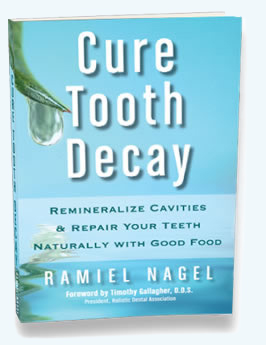
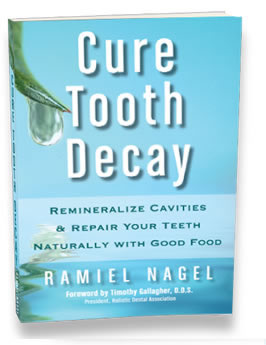
There are and other dental procedures, which should be the advice that more dental professionals share with their patients. By consuming a diet of nutrient-rich whole foods that contain fat-soluble vitamins, an individual can begin supplying the body with the vitamins and minerals it needs to build strong bones and teeth. It is also important to note that individuals should avoid consuming grains, anything overly sweet, or processed foods. To learn more about tooth decay and caries, and how to heal and remineralize the teeth through your diet, read the book .
References:
Elderton, RJ. "Overtreatment with restorative dentistry: when to intervene?." International Dental Journal. 43.1 (1993): 17-24. Web. 14 Jan. 2012. < http://ukpmc.ac.uk/abstract/MED/8478124/reload=0;jsessionid=GiZ1Rzc8CA3u6hSrfsYL.80 >.
Elderton, RJ. "Preventive (evidence-based) approach to quality general dental care.." Medical Principles and Practice : International Journal of the Kuwait University, Health Science Centre . 12.1 (2003): 12-21. Web. 27 Jan. 2012. < http://ukpmc.ac.uk/abstract/MED/12707497 >.
Photo Credit: U.S. Navy photo by Photographer's Mate Airman Apprentice Ronald A. Dallatorre from Wikimedia Commons Public Domain




9:40 am on November 29, 2012 Permalink
A crown is a type of dental restoration that fully cups over that portion of a tooth or dental implant that lies at and above the gum line… I like this post..
2:36 am on February 3, 2013 Permalink
I have a dentist that is all about diet and proper nutrition. He says it is crucial to eat right food in order to avoid decay and have strong teeth! I bought the PDF e-book and It is great. It is the way they describe. Thanks to my dentist where I live in Edinburgh http://privatedentistedinburgh.co.uk/ and his priceless advise to get this e-book I no longer struggle whenever I drink cold drinks or hot. I stopped bleeding after every tooth brushing as well.
I also believe that we can heal ourselves by proper diet in general! Pill is not an answer to every sicness, I think…
Regards
Adam
4:22 pm on March 31, 2013 Permalink
When people visit the dentist, they are often told that they need to have invasive procedures done, such as root canals, fillings, or other treatments that are both costly and painful.
4:35 am on April 3, 2013 Permalink
Thanks on this article, I really like the way you laid all the information. It is well written and very informative.
2:40 pm on April 25, 2013 Permalink